The Hinterkaifeck Murders: What the Police File Actually Says
Six people were killed at Hinterkaifeck in 1922, and the legend has been growing ever since. This is what Munich police file 8091b actually says — the footprints, the replica weapon, the skulls, and the pages that are missing from the file itself.
Six people were killed at Hinterkaifeck, an isolated farm in Bavaria, on the night of March 31 to April 1, 1922. Nobody was ever charged, and the investigation was closed in 1955, unsolved. What survives is not a solution but a file: Munich police file 8091b, held today by the Staatsarchiv München. Read exactly, it supports a smaller, stranger story than the legend — footprints that led to a machine hut, not a front door; a murder weapon that burned in 1944 and was exhibited in 2026 as a replica; and victims’ skulls taken, on police orders, to clairvoyants. This article follows the file, and labels every claim for what it is.
KEY FACTS — HINTERKAIFECK MURDERSDates: Night of March 31 / April 1, 1922; the bodies were found on April 4, 1922. • Location: Hinterkaifeck, an isolated farm (house no. 27½, parish of Wangen, near Gröbern), about 70 km north of Munich, Bavaria. • Who died: Andreas Gruber (63–64), his wife Cäzilia (70–72), their widowed daughter Viktoria Gabriel (35), her daughter Cäzilia (6–7), her son Josef (2), and the new maid, Maria Baumgartner (44–45). Ages vary slightly between sources and are given here as ranges. • The file: Staatsarchiv München, Polizeidirektion München 8091b — copies and carbon copies; the Neuburg prosecutor’s originals were destroyed in 1944. • The record: exactly five crime-scene photographs were taken in 1922; no fingerprints were taken; no testable physical evidence survives. • Status: closed in 1955, unsolved, nobody ever charged.
The farm and the family
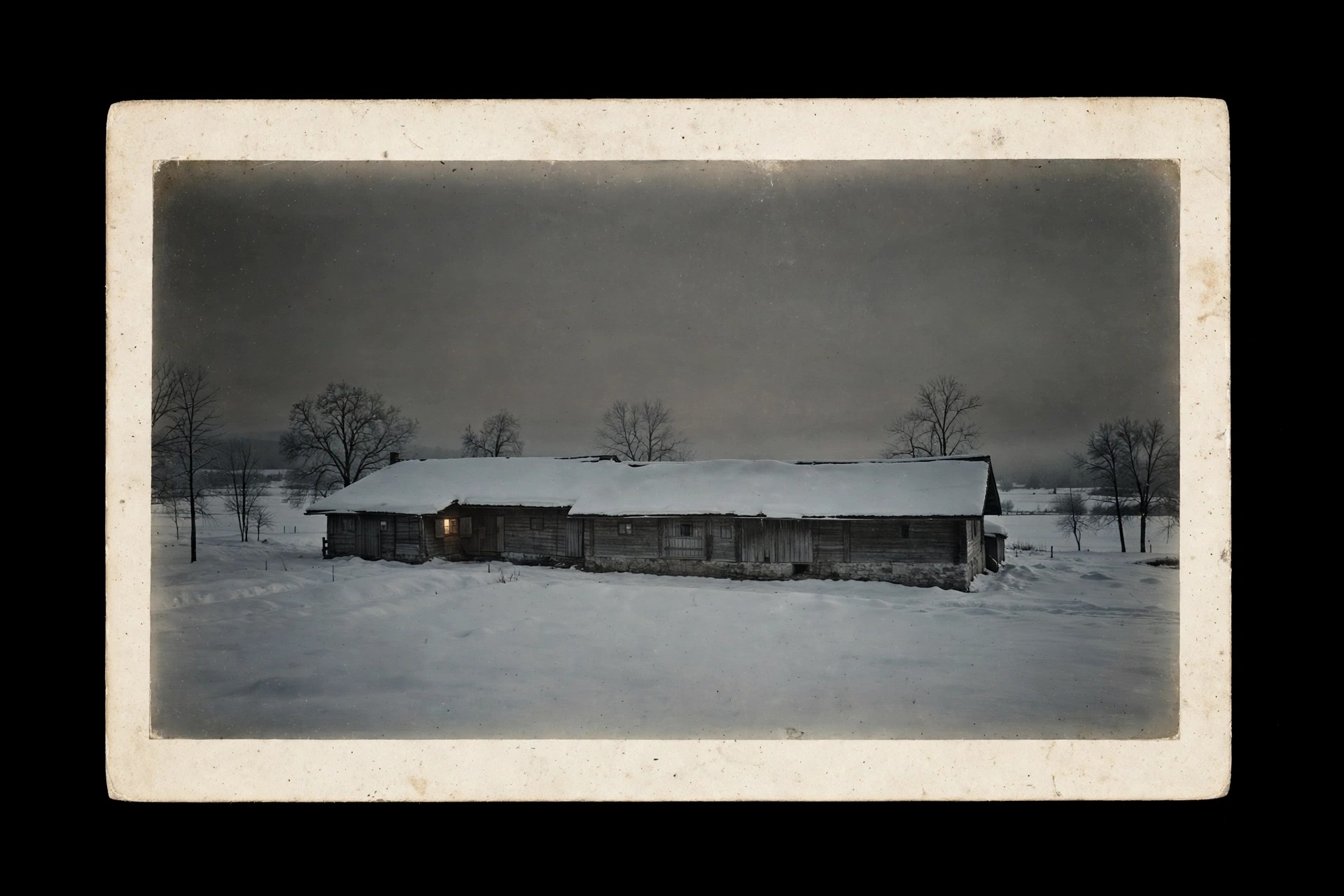
Hinterkaifeck was never an official place name. It was a house name for a single long building — living quarters, stable and barn under one roof, with one continuous attic above them all — about 500 meters from the village of Gröbern. Viktoria Gabriel owned the farm and lived there with her parents, her two young children, and, from the last afternoon, a new maid.
[FACT] In 1915 a court in Neuburg convicted Andreas Gruber and his daughter Viktoria of incest: he received one year in a penitentiary, she one month in prison. That conviction is a court record. What is not established — and is never stated as fact here — is that Andreas fathered Viktoria’s son Josef. The neighbor, Lorenz Schlittenbauer, officially acknowledged paternity in 1919 and paid a settlement. The file leaves Josef’s paternity unresolved.
The days before — what Andreas said
In mid-March 1922 the household found a Munich magazine that belonged to nobody; the postman confirmed nobody in the village subscribed to it. In the legend it has become a strange newspaper delivered to the farm. The record is smaller and odder. A house key also went missing — the family’s only key — after which the house could only be bolted from inside.
[WITNESS ACCOUNT — file p. 1034] On March 30, Andreas Gruber found footprints in fresh snow behind the house. As recorded from his own reported words, the track led to the machine hut — not to the front door, and not out of the forest — and he saw no track leading away. No police officer ever saw those tracks. That distinction stays visible every time the footprints are mentioned here.
Andreas said one more thing that day: all night he had heard something in the attic, as if someone was walking around. He went up with a light, found nobody, and refused the help he was offered. The next afternoon, March 31, at about 4:30 p.m., Maria Baumgartner arrived to start work. Her sister walked with her, stayed about an hour, and later told police the farm had felt uncannily lonely. She was the last person known to have seen the household alive.
The night — and the theory the file undermines
[FACT — court commission protocol, file p. 1] That night, six people were killed by blows to the head; the commission put the window between 8 and 10 in the evening. Andreas and young Cäzilia were already in their nightclothes; the adult women were still dressed for the day. Four were found in the barn, at the door between stable and barn, covered with hay, with a wooden door laid over them. Maria Baumgartner was found in the maid’s chamber, Josef in his pram in the bedroom. This article states that once, plainly, and does not return to the injuries.
[THEORY — the commission’s assumption] Almost every retelling says the four were lured, one by one, to the barn, perhaps by a cow loosened in the stable. The file holds that theory — and, in the same protocol, the test that undermines it: one investigator stood in the maid’s chamber while the others shouted in the stable, at an agreed time, through those thick walls. Nothing was audible. The catalogue concludes that whether the residents were really roused by noises from the animals is questionable. How four people came to be at that barn door, the file does not know.
The four silent days, and the discovery on April 4
For four days the farm looked almost alive. [FACT] The cattle were fed, watered and milked; the whole stock of bread was used up, and meat in the pantry had been freshly cut. A passer-by on April 1 saw smoke from the chimney, and the bake-oven door closed in the morning and half-open by evening. The record supports this much: someone stayed after the murders, or came back at least once. [LEGEND, as usually told] A killer living in the house for days, eating and sleeping like the householder, goes further than the file goes.
Meanwhile the absences accumulated: young Cäzilia missed school, the family missed Mass, salesmen knocked and got no answer. On Tuesday, April 4, a mechanic spent about four and a half hours at the farm repairing a motor and met nobody. The dog, barking inside when he arrived, was tied outside the front door when he left, with an injured eye, and the barn door stood open. He reported the emptiness in the village.
Lorenz Schlittenbauer sent his sons first, then went in himself with two other men, through the machine house. They found the four in the barn. Schlittenbauer went on alone into the house, found Maria and Josef — and then, audibly to the men waiting outside, unlocked the front door from inside, with a key, saying it had been in the door. [FACT — his statement, April 5, 1922, file pp. 28–31] It was the family’s only key — the same key reported missing before the murders.
What the commission found
The commission entered a locked house that onlookers had already walked over. In the bedroom, a purse had been emptied and papers spread across the bed — someone had lingered there, searching — yet around 1,800 gold marks in coin were still in a cupboard afterwards. How much the farm held, and how much was taken, the investigators could never establish.
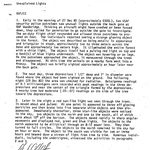
Illustration — Munich police file 8091b, held today by the Staatsarchiv München: the surviving record on which this article is based.
Above the machine house, the protocol records an attic laid with straw, hollows in a hay heap where a person could lie, a knotted rope hanging into the machine room, and two roof tiles displaced, each overlooking the yard. [FACT] The traces are in the protocol. [THEORY] They have been read as an intruder’s observation post, and, very differently, as a hiding place connected to the family’s own secret. The file supports the traces, not either story built on them.
The weapon — found, lost, copied
[FACT] The first suspected weapon, a pick found in the feed trough, was examined within days and ruled out: one of Viktoria’s wounds was small and round, and that pick could not have made it. The stronger candidate appeared in February 1923, when the farm was demolished: in the false floor above the stairs lay a knife and a blood-stained grubbing mattock, a Reuthaue. A former farmhand said on the record that Andreas Gruber had made it himself, and a protruding screw from a botched repair matched the round wound. Whether a second weapon was also used, the file never answers.
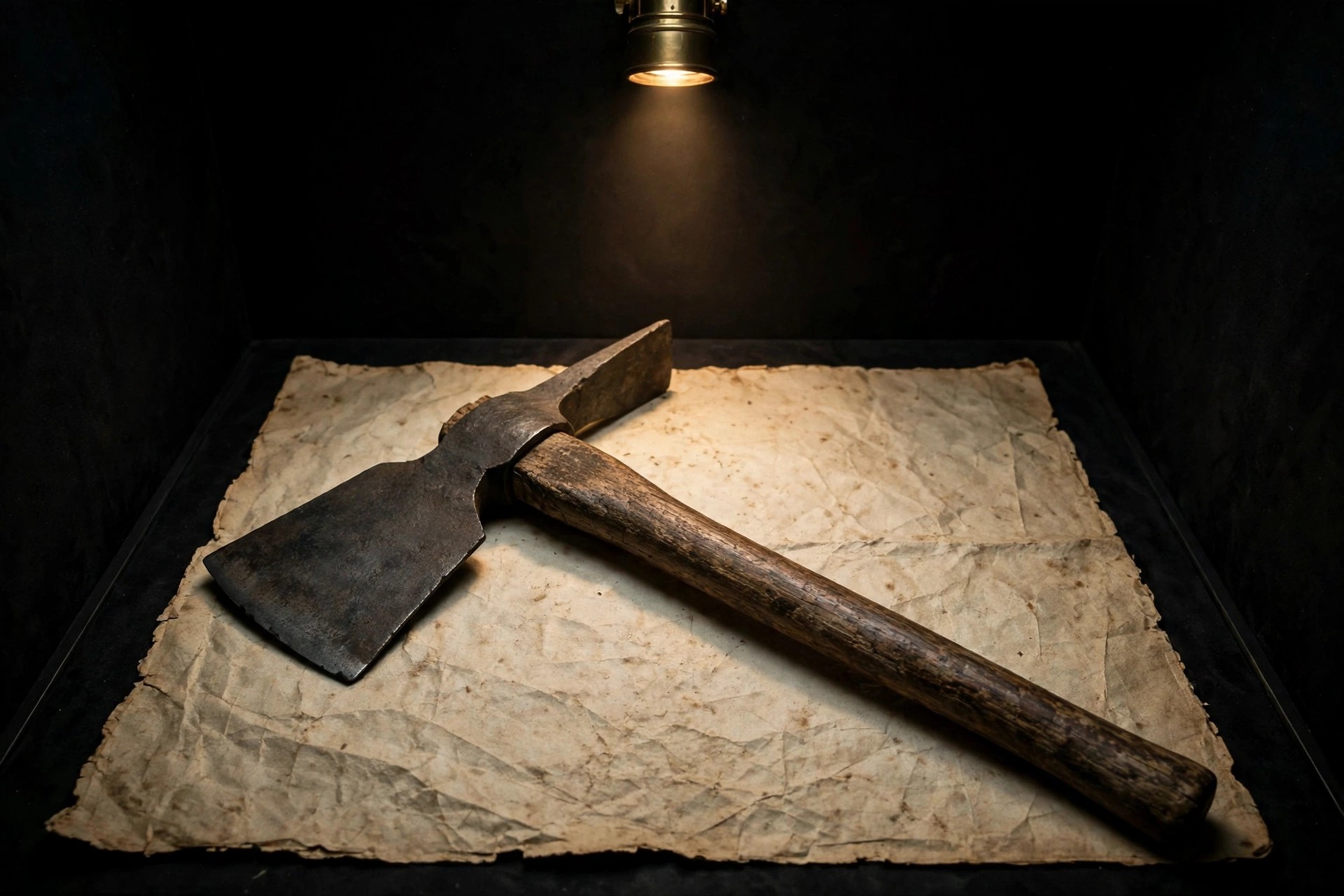
[FACT] The original mattock did not survive. On February 25, 1944, bombing destroyed the justice building at Augsburg, and with it the Neuburg prosecutor’s original files and the weapon itself. What Munich exhibited in 2026 is a replica, made around 1970 by a retired detective who had taken the case up privately — an honest object, honestly labelled in the catalogue. Any account that shows it to you as the murder weapon is showing you a copy.
Replica, c. 1970 — an illustration of the grubbing mattock exhibited in Munich in 2026. The original, found hidden in the farm in February 1923, was destroyed in the Augsburg bombing of February 25, 1944.
The investigation — thorough, late, and empty-handed
[FACT] The investigation was led from Munich by Chief Inspector Georg Reingruber. Six officers, two of them dog handlers, left the city on the night of the discovery; the tracking dog found no scent, because the scene had already been trampled. The first interrogations were held in the farmhouse kitchen. And no fingerprints were taken, although fingerprinting was established practice by 1922 — a failure later investigators would name, bluntly, again and again.
The case was filed as robbery-murder, and the reward poster said so — but nobody could establish how much money the farm had held, and much of it was still there. More than 100 proceedings were opened, and Reingruber questioned witnesses until 1930. The quiet scandal of this file is lateness: the mechanic was not questioned until 1925; the maid’s sister, the last person to see the household alive, gave the statement that survives in 1930; the postman’s account was taken in June 1952, thirty years late. The parish priest’s interrogation records are simply missing from the Munich file. [FACT] The files were formally closed in 1955. The case remains unsolved, and nobody was ever charged.
The suspects, graded honestly
Two names dominate every retelling, and the file treats them very differently. [THEORY — named reviewers, attributed] Lorenz Schlittenbauer — neighbor, Viktoria’s former lover, the man who found the bodies, moved two of them, entered the house alone, and produced the missing key — was examined by the police of the day, who found no motive: he was well off, well regarded, and the guardianship dispute had cost him nothing. In 1930 a senior review reached the coldest sentence in the case: he cannot be excluded, and nothing can be proven. He was never charged, sued people who called him the murderer and won, and died in 1941 an uncharged man in the record.
[FACT] Karl Gabriel, Viktoria’s husband, was officially killed in France in December 1914. The legend says he came back; the record contradicts it. His comrades testified to his death, and in January 1924 Josef Brummer stated it on the record, with the date, the hour and the cause — December 12, 1914, killed by a mine (file pp. 567–568). His soldier’s grave in France was later found and photographed; the claim, still repeated online, that Karl Gabriel has no grave is false. What is true is narrower: the body was never brought home, and in 1922 his death was doubted — which is why police investigated the line for years.
The skulls in the box
The part of this story that sounds most like invention is documented best. [FACT — transcripts at file pp. 150 and 156–158] After the autopsies, the victims’ heads were sent to the prosecutor at Neuburg. In May 1922, Munich police did something that was then a recognized investigative practice: they commissioned clairvoyants — two of them — and brought the victims’ skulls to the sittings, in a box. The Nuremberg sitting on May 2, 1922, produced claims that the killers knew the new maid and that a dark man was involved; a second sitting on May 9 produced similar results. A medium identified a photograph of Josef Bärtl, an escaped asylum patient wanted since February, before the murders. He was never caught, and nothing ever placed him at that farm.
This is not a ghost story. It is a police force, out of evidence and out of ideas, using the tools its era offered — and writing the results down, in full, in the same file as the scene protocol. The séances produced nothing that held — but they are in the record, on numbered pages, and the legend did not invent them.
The maid who quit — what she actually said
[WITNESS ACCOUNT — Kreszenz Rieger, statement of April 24, 1922] Every retelling has a maid before Maria who quit because the house was haunted. Her name was Kreszenz Rieger, and her police statement survives. She reported not ghosts but men: a local man at her window at night, questioning her about who slept where and where the money was kept; another man inspecting the machine house, looking up at the attic; her chamber door opening by itself around midnight. After about four weeks she left, in fear. She named names; police followed them up and charged nobody. Her statement is a single witness, given after the murders, and it is held at exactly that strength here. [LEGEND] A woman who reported identifiable men was retold for a century as a woman who fled from ghosts.
Legend vs. record
The pattern is consistent: the legend is almost always the file, enlarged. The footprints grow a forest and a front door. A magazine becomes a newspaper. A witness who named local men becomes a witness to a haunting. An investigative assumption becomes the established sequence of the murders, although the investigators’ own test cuts against it. The closing ledger below, taken from the episode, separates the three piles one last time.
Illustration — pages are missing from the file: the parish priest’s interrogation protocols are not in the Munich file, and the 2026 exhibition catalogue flags the gap itself.
The ledger — what the file actually says
The episode closes with the same ledger, read aloud. [FACT] The case was closed in 1955, unsolved, with no one ever charged, and no testable physical evidence survives: the skulls and the original weapon were lost in 1944, the farm was demolished in 1923, and no fingerprints were ever taken.
In the File
In the Legend
Still Unknown
Six people killed on the night of March 31 / April 1, 1922; found April 4, 1922. Court commission protocol, 8091b, p. 1.
“Footprints from the forest to the front door” — the file says behind the house, to the machine hut, as reported speech (p. 1034).
Who killed the six people at Hinterkaifeck, and how four of them came to be at the barn door.
Andreas Gruber’s reported words on the footprints and the attic noises, 8091b, p. 1034.
“The maid quit because the house was haunted” — Kreszenz Rieger named identifiable local men, in a statement dated April 24, 1922.
Who made the mattock — the testimony disagrees — and whether a second weapon was used.
The 1915 incest convictions: Andreas, one year; Viktoria, one month. Court record. Josef’s paternity is NOT established; Schlittenbauer acknowledged it in 1919.
“The victims were lured to the barn” — the commission’s assumption, undermined by its own hearing test in the same protocol.
How much money, if any, was taken.
Victims’ skulls taken to two police-commissioned clairvoyants, May 1922; transcripts at 8091b, pp. 150, 156–158.
“Karl Gabriel has no grave” — contradicted by the record: his death on December 12, 1914 is documented, and his grave in France was found.
Where the parish priest’s interrogation records went, and why central witnesses were questioned years late.
Karl Gabriel’s death, December 12, 1914, documented on the record (Brummer statement, 1924); grave in France later found and photographed.
“A killer lived in the attic / lived in the house for days” — traces and a stayed-or-returned presence are documented; residence is inference.
Who the 2007 police students agreed on. The name was withheld, and proof, on their own project leader’s statement, can no longer be produced.
The weapon found in the 1923 demolition; the original destroyed at Augsburg, February 25, 1944. The 2026 exhibit is a replica, c. 1970.
“Josef was Andreas Gruber’s son” — paternity was disputed and never established.
On the surviving record, the case cannot now be solved — only read, exactly.
Exactly five crime-scene photographs, 1922. No fingerprints were taken. Case formally closed 1955; unsolved; no one ever charged.
The file is smaller, stranger and more honest than the legend — and what it actually says is the story.
Six people are buried at Waidhofen, under a memorial stone. A new memorial stands in the field where the farm stood. And in Munich, in copies and carbon copies, the file remains — closed in 1955, unsolved, and still, page by page, the most interesting version of Hinterkaifeck there is.
Watch the episode
WATCH — HINTERKAIFECK: WHAT THE POLICE FILE ACTUALLY SAYS[EMBED placeholder — YouTube URL to be added at launch] The companion episode works through the same file on screen: the replica in its display case, the protocol and the hearing test, the weapon’s journey from a false floor in 1923 to a fire in 1944, and the skulls in the box — every claim labelled at the moment it is made. If you came here from the video: the reverse link is live in the video description, which points back to this article as the full case file with sources.
Read next in this series (internal links):
Rendlesham Forest Incident — the previous file in the series: https://cryptofmistery.com/rendlesham-forest-incident/
The Lead Masks Case, Vintém Hill — forthcoming: https://cryptofmistery.com/lead-masks-case-vintem-hill/
The Somerton Man — forthcoming: https://cryptofmistery.com/somerton-man-tamam-shud/
Frequently asked questions
What happened at Hinterkaifeck?
Six people — Andreas and Cäzilia Gruber, Viktoria Gabriel, her children Cäzilia and Josef, and the maid Maria Baumgartner — were killed at the isolated Bavarian farm of Hinterkaifeck on the night of March 31 to April 1, 1922. The bodies were found on April 4, 1922. Nobody was ever charged.
What does the police file say about the footprints at Hinterkaifeck?
The file records Andreas Gruber’s reported words (file 8091b, p. 1034): on March 30, 1922, he found a track in fresh snow behind the house that led to the machine hut, and saw no track leading away. No officer ever saw the tracks; they survive as reported speech, not a police finding.
What was the Hinterkaifeck murder weapon, and where is it now?
The strongest candidate is a grubbing mattock, a Reuthaue, found hidden in the false floor above the stairs when the farm was demolished in February 1923. The original was destroyed when the Augsburg justice building was bombed on February 25, 1944. The weapon exhibited in Munich in 2026 is a replica made around 1970.
Did the police really take the victims’ skulls to clairvoyants?
Yes — it is in the file, not the legend. In May 1922 Munich police commissioned two clairvoyants and brought the victims’ skulls to the sittings; the transcripts are in file 8091b at pages 150 and 156–158. The sittings produced nothing that held, and Josef Bärtl, the man a medium identified, was never caught and never placed at the farm.
Who were the main suspects in the Hinterkaifeck murders?
Lorenz Schlittenbauer was investigated for years; a 1930 review concluded he could not be excluded and nothing could be proven, and he was never charged. Karl Gabriel was also investigated, but his death in France on December 12, 1914 is documented in the file, and his grave in France was later found. More than 100 proceedings were opened in total.
Is the Hinterkaifeck case solved?
No. The investigation files were formally closed in 1955, unsolved, and nobody was ever charged. No testable physical evidence survives — the original weapon and the victims’ skulls were lost in 1944, the farm was demolished in 1923, and no fingerprints were taken — so on the surviving record the case cannot now be solved, only read exactly.
Editor note (do not publish): these six questions and answers map directly to FAQPage schema (JSON-LD) on the published page for rich results and AI-search citation. The visible wording must match the schema wording exactly — if one is edited, edit the other in the same update.
Sources and documents
Staatsarchiv München (StAM), Polizeidirektion München 8091b — the surviving Munich police file: court commission protocol (p. 1); Schlittenbauer statement, April 5, 1922 (pp. 28–31); clairvoyant transcripts, May 1922 (pp. 150, 156–158); Brummer statement on Karl Gabriel, January 25, 1924 (pp. 567–568); Siegl statement on the weapon, July 5, 1923 (pp. 678–679); Andreas Gruber’s reported words (p. 1034); Franziska Schäfer statement, 1930 (p. 1126).
Elena Hiemer / Generaldirektion der Staatlichen Archive Bayerns, “Der sechsfache Mord in Hinterkaifeck” — official catalogue of the exhibition at the Bayerisches Hauptstaatsarchiv, Munich, March 17 – April 10, 2026, citing file 8091b throughout. The Hauptstaatsarchiv was the venue; the file itself is held by the Staatsarchiv München.
Historisches Lexikon Bayerns — case entry, with file images credited to StAM, Polizeidirektion München 8091b.
Episode research report and script for CM-002, “Hinterkaifeck: What the Police File Actually Says” (Crypt of Mystery, October 2026) — the production source pack behind this article.
Our editorial standard
Crypt of Mystery labels every claim in this article: FACT for what a named contemporary document shows, THEORY for an explanation offered by a named person or source, WITNESS ACCOUNT for what a named person reported, and LEGEND for a later retelling that is not a documented event. Victim ages are given as ranges because sources differ. Josef’s paternity by Andreas Gruber is not established and is never stated here as settled. Any illustrative image is captioned as an illustration, never presented as evidence. If a source document corrects anything here, we will update this page and note the correction. Corrections are welcomed via the contact page